
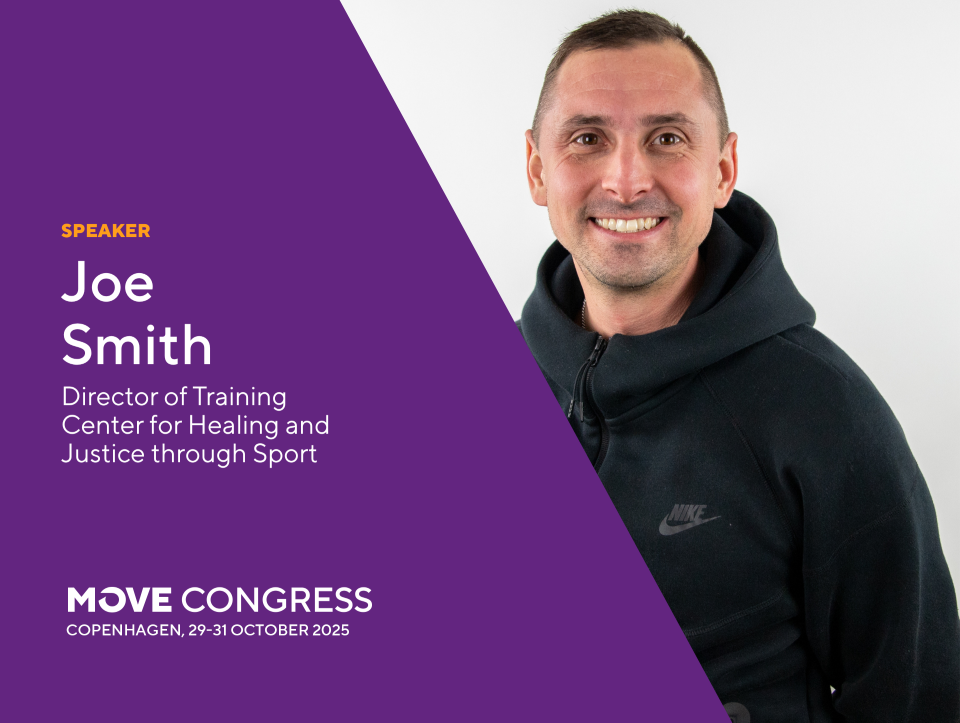
Ahead of his October 31 MOVE Congress presentation, Joe Smith, Head of Training at the Center for Healing and Justice through Sport, shares his views on the important role sport can play in the healing process
How has the global conversation around healing through sport shifted in recent years?
There’s been a real shift toward understanding that sport isn’t just physical—it’s also deeply social and emotional. Mental health, trauma-informed approaches and equity are finally now part of the conversation. Athletes’ willingness to speak about mental health issues has also made it more mainstream. Organizations are starting to think about not just the competitions themselves, but also the systems around sport. The issue is that a lot of this progress still benefits those who already have access to resources. In order for a true shift to take place, there needs to be a real, sustained financial investment providing coaches, educators and program leaders with the support they need to offer greater opportunities for all.
There are many challenges involving access and equity. The communities facing the biggest barriers are often the ones with the least access to safe spaces, trained coaches, or consistent programming. We also have to wrestle with systemic challenges. Funding, pressure to win and policy priorities often push the developmental and healing side of sport to the sidelines. Our work is to make sport a space where everyone, especially those who have historically been excluded, can feel safe, seen, and capable of growth.
Could you give us a preview of your presentation at the MOVE Congress—what themes or findings will you be sharing?
The session will examine how coaches can apply trauma-informed strategies to sport settings. It will focus on how to use the inherent opportunities in sport to increase athlete regulation, and create environments in which young people feel safe and prioritize relationships and safe risk-taking. We will also examine how we can differentiate instruction in a way that supports the development of all athletes, regardless of their skill level, and how to manage athlete dysregulation in real-time.
 What is your favourite way to be physically active?
I’ve played and coached basketball my whole life so it has to be pickup basketball for me! It has often been a space where I can regulate, connect and compete with friends and meet people from all over the world. That combination of joy, connection, and belonging is exactly why sport is healing. It reminds us that we’re not just bodies moving—we’re human beings who need support, trust, and the opportunity to grow.
Joe Smith is the Director of Training at the Center for Healing and Justice through Sport (CHJS), a US‑based nonprofit committed to harnessing the power of sport to promote healing and positive development in young athletes and communities. Before joining CHJS, he spent eight years in various roles at PeacePlayers International, an organisation that uses basketball to unite and educate communities.
Register for the MOVE Congress 2025 here: https://movecongress.com/register

