
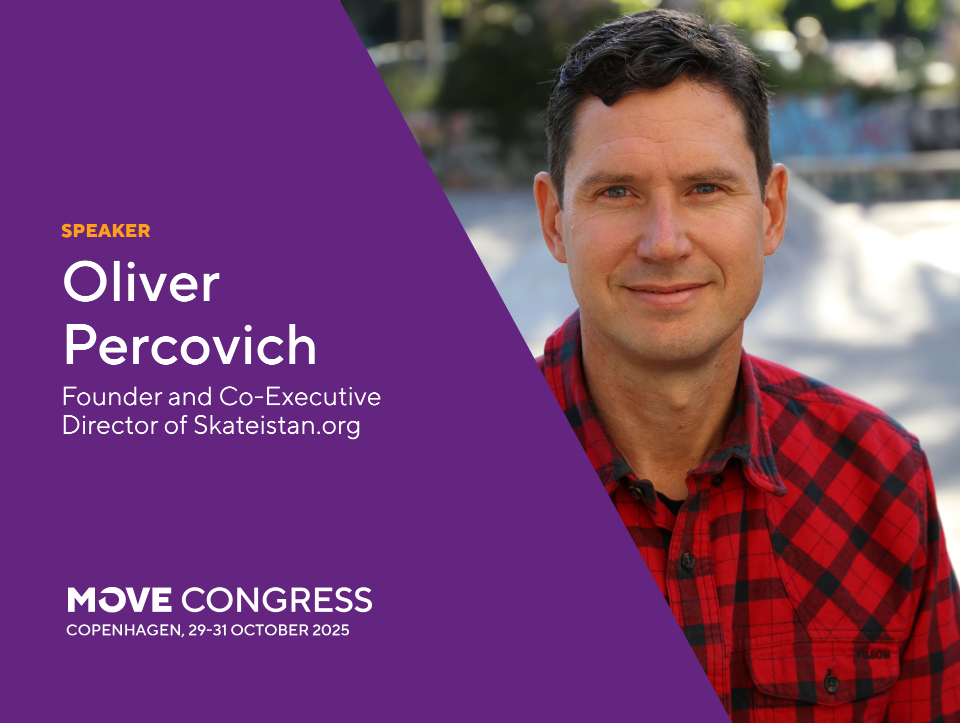
An interview with Oliver Percovich, Founder and Co-Executive Director of Skateistan.
When Oliver Percovich arrived in Kabul nearly two decades ago with a skateboard under his arm, he wasn’t planning to start a non-profit organisation. Yet when local children asked to try his board, it kicked off a journey that would grow into Skateistan, a global network using skateboarding and creative education to empower young people in some of the world’s most challenging environments.
You’ve taken Skateistan from a small local initiative to a global movement. What lesson from that journey do you think resonates most with the MOVE Congress audience?
Oliver Percovich: The power of listening. Skateistan grew because we listened carefully — first to the children in Kabul. I didn’t go there planning to start an NGO or even a skateboarding program; I was just a skateboarder. But the kids told me they wanted to skate — and I listened.
In Afghanistan, 70% of the population is under 25 and half are under 15, yet few were being heard. If they wanted to skateboard, so be it. It came from the kids.
That same principle of listening guided the next chapter. As Skateistan grew, opening skate schools in Afghanistan, Cambodia, and South Africa, we saw others around the world wanting to do the same. They reached out for advice on everything from fundraising to getting girls involved. So we listened again and created a knowledge-sharing network. Today, more than 1,000 social skate projects in 115 countries are part of that community.”
That simple act of listening sparked something extraordinary. Girls, who at the time were largely excluded from any form of sport, began to ask if they could skateboard too. Percovich quickly realised that their enthusiasm was the seed of something powerful.
You’ve said that girls in Afghanistan were actually the first to ask to skateboard. How was that possible?
Percovich: “It blew my mind away! I didn’t see girls doing skateboarding much anywhere, and then in Afghanistan, there were no girls playing cricket or doing any of the flying kites. They just weren’t allowed to do anything. And then they were asking me to skateboard, so I said, let’s do this. So we had to find a culturally sensitive way to make it possible,” he recalls. “I knew it had to be handled carefully. We worked with families, community leaders, and even religious clerics to ensure everyone felt it was safe and appropriate. We invested in things like transport and home visits for girls. Eventually, girls got more time to skate — and they became better than the boys. Suddenly, people started saying: ‘This must be a sport for girls.’”
One of those stories is that of a girl who joined Skateistan’s Back-to-School program, returned to formal education, and eventually became a nurse, treating one of Skateistan’s own students years later. “It’s not just about sport,” Percovich says. “It’s about creating space for kids to dream — and to see what they can become.”
Today, even after the Taliban takeover, Skateistan continues to run programmes for girls under 12 in Afghanistan.
How do you see the long-term impact of your work, especially for girls and communities in Afghanistan?
Percovich: “A lot of it is intergenerational. If a girl can take part in the program for even a few months, she’s more likely to prioritise education and opportunities for her own children later on. That’s how real change takes root.
It’s also about representation. When a girl from a poor neighbourhood or a marginalised group sees someone like her learning, teaching, or leading, she realises that she belongs there too. That’s why inclusion has to be visible — it’s not enough to just offer the opportunity; people have to see that it’s possible.”
And what message will you bring to the MOVE Congress?
Percovich: I want to highlight the importance of listening and letting go. Too many systems in sport are top-down. Skateboarding thrives because it’s bottom-up — driven by the people doing it. Leaders need to make space for new voices, especially young ones. That’s how sport stays alive and relevant.
“Leaders need to let go. They need to make space and listen, like their lives depend on it. If they do, their sports — and their communities — will thrive.”
At the MOVE Congress 2025, Percovich will share how listening, trust, and bottom-up leadership helped turn skateboarding into a global social movement — and why sport systems everywhere can learn from its grassroots approach. Visit www.movecongress.com for more information.
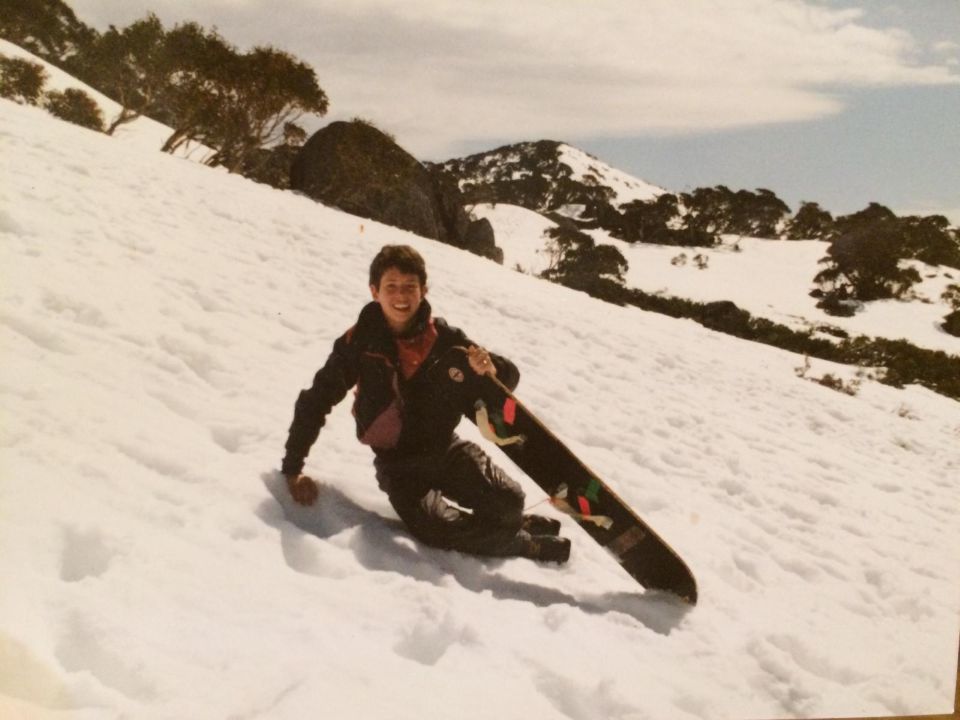
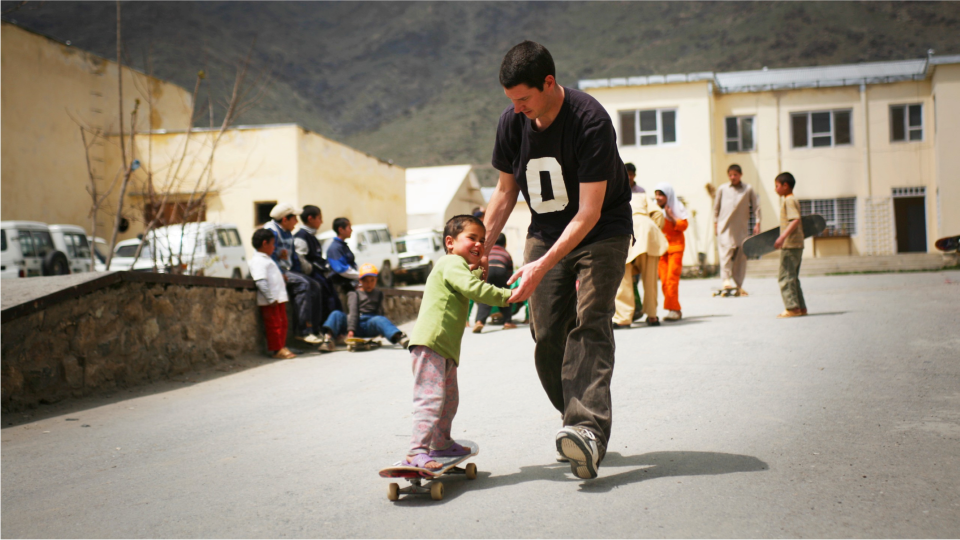
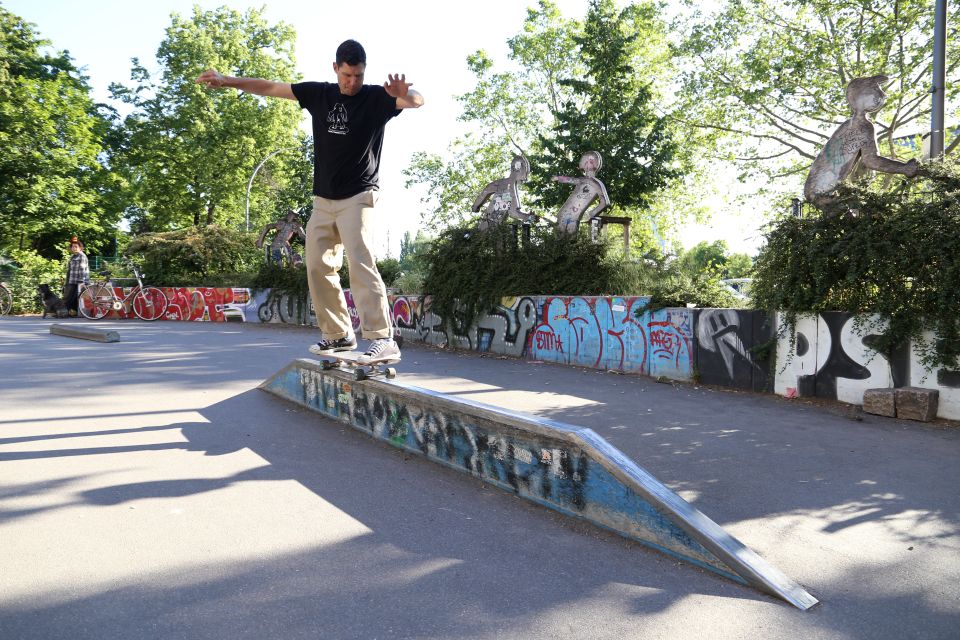
Photos: Oliver Percovich shares a few snapshots of his lifelong connection to movement, from teaching kids to skateboard in Afghanistan, to his own self-made snowboard in Australia in 1985.

